
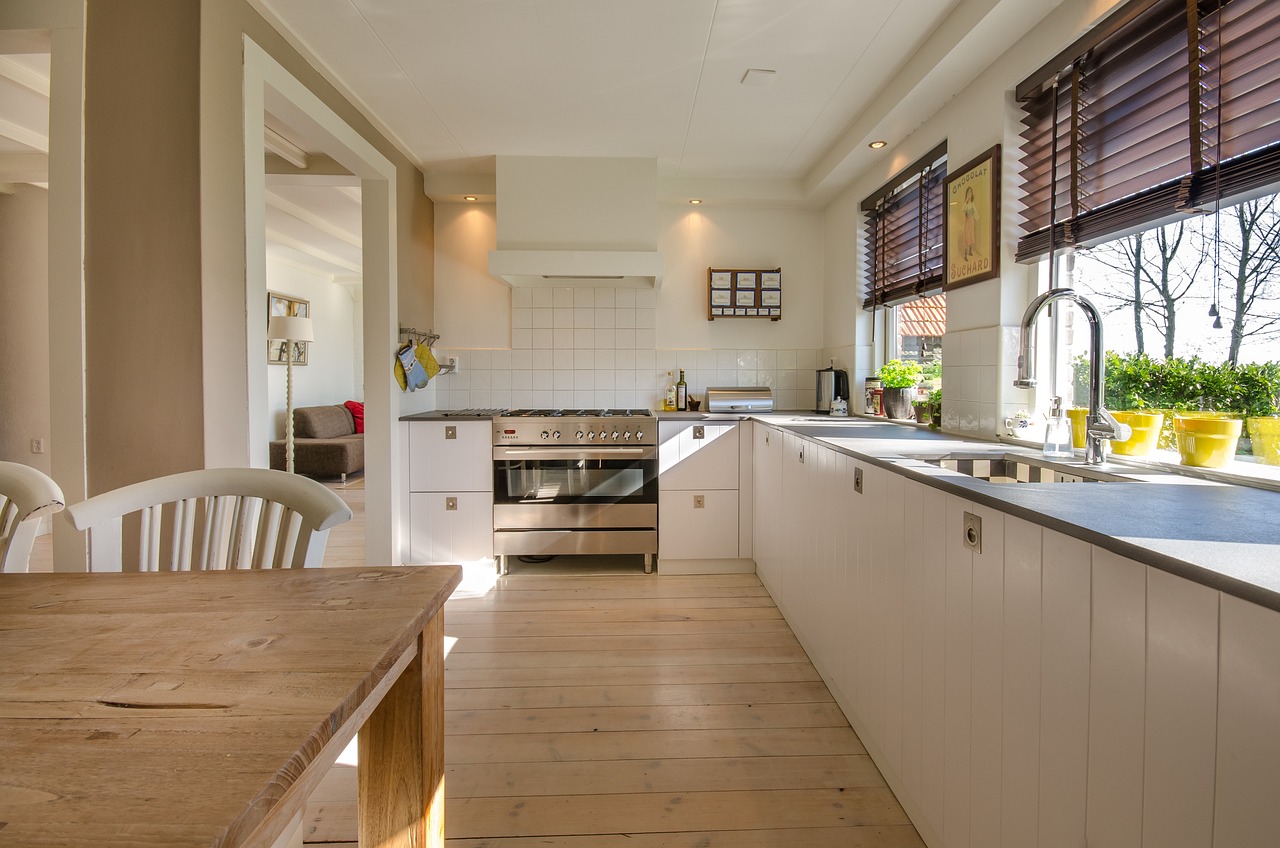
If you want Granite Kitchen Countertops that combine lasting durability with natural beauty, granite delivers both function and style for everyday kitchen life. Granite resists heat, scratches, and stains when properly sealed, so you get a hard-working surface that also makes a strong visual statement.
This post will walk you through what granite offers, how to choose the right color and pattern for your space, and what installation and routine care actually involve so you can make a confident choice for your kitchen.
Granite Kitchen Countertops Overview
Granite offers long-lasting hardness, wide color variation, and heat resistance that suits busy kitchens. You’ll find specific trade-offs: sealing needs, slab variation, and installation weight to plan for.
What Is Granite?
Granite is a natural igneous rock formed from cooled magma, composed mainly of quartz, feldspar, and mica. Each slab carries mineral-influenced veins and flecks, so no two pieces are identical.
You handle granite as a honed, polished, or leathered surface, each finish changing sheen and texture. Typical slab thicknesses are 2 cm or 3 cm; 3 cm reduces the need for visible support and seams.
Expect density that resists heat and most scratches, yet heavy weight requires professional templating and reinforced cabinetry. Porosity varies by slab, so periodic sealing helps prevent stains from oil, wine, and acidic spills.
Benefits of Granite Countertops
Granite delivers exceptional hardness and heat resistance, so you can place hot pans briefly without immediate damage. It also resists everyday scratches from knives and cookware when properly finished.
Aesthetics remain a major benefit: natural patterning and color variation add resale value and a high-end appearance. You can choose finishes—polished for shine, honed for matte, or leathered for texture—to match your style.
Maintenance is straightforward: routine cleaning with mild soap and water and resealing every 1–3 years depending on porosity. With proper care, granite can last decades and stand up to the wear of active kitchens.
Popular Colors and Patterns
Granite ranges from deep blacks and greens to warm browns, creams, and bright whites with contrasting veins. Popular names you’ll see include absolute black, white ice, and verona brown—naming varies by fabricator.
Pattern types include:
- Solid-looking slabs with subtle speckling.
- Veined slabs with dramatic flowing lines.
- Flamed or heavily mottled stones with intense movement.
When selecting, view full slabs under your kitchen lighting to check for color shifts and pattern repeat. Match undertones in cabinets and backsplashes to avoid visual clashes.
Comparing Granite to Other Materials
Compared with quartz, granite is natural and variable; quartz offers uniformity and lower porosity since it’s engineered. Quartz resists staining without sealing, while granite typically needs periodic sealing.
Compared with marble, granite is harder and more stain-resistant; marble is softer and better for baking surfaces but shows patina and etching from acids. Compared with laminate and solid surface, granite provides superior heat resistance and durability but costs more and requires professional install.
Weigh costs, maintenance, aesthetics, and slab availability. If you want unique, natural variation and high heat tolerance, granite is a strong choice; if you prioritize uniformity and minimal sealing, consider engineered stone.
Installation and Care
You’ll focus on selecting a slab that matches color, pattern, and thickness; hire skilled fabricators for precise templating, cutting, and support; and follow a sealing schedule plus simple daily care to preserve appearance and performance.
Choosing the Right Granite Slab
Inspect slabs in person for veining, color consistency, and fissures; photos can mislead on pattern scale and contrast. Stand back and view the slab under the lighting closest to where your countertop will be installed to confirm how patterns read at different angles.
Confirm slab dimensions with a margin for seams and overhangs; standard thicknesses are 2 cm and 3 cm—choose 3 cm for full overhangs or heavy use. Ask the supplier for slab measurements, yield layout (how many pieces from the slab), and any reserved areas for repair if necessary.
Request a written certificate or details about porosity and recommended sealer type. Check for large pits, hairline fractures, or resined repairs; avoid slabs with extensive natural voids unless you plan to fill them cosmetically.
Professional Installation Process
Hire fabricators with stone-specific tools: bridge saws for straight cuts, waterjet or CNC for cutouts, and diamond-polish grinders for edge profiles. Ensure they perform an accurate template using plywood or digital templating so sink and appliance cutouts align perfectly.
Confirm substrate reinforcement before installation; add 3/4″ exterior-grade plywood under cabinets if installers recommend it to prevent sagging. Installers should dry-fit the slabs, check seam placement and level, then apply silicone or epoxy adhesives in seams and to supports.
Edge finishing and seaming require experienced hands: choose seam orientation that minimizes visual impact and request epoxy color matched to the stone. Expect installers to shim, level, and caulk the back splash and to reconnect sinks once adhesives cure—schedule countertop installation after plumbing and cabinet work is finished.
Sealing and Maintenance
Test porosity with a water drop test: a darkening spot within 10–15 minutes indicates you need a penetrating sealer. Apply a high-quality penetrating (impregnating) sealer per manufacturer instructions—typically once at installation and then every 1–3 years depending on use and test results.
Clean daily with warm water and a pH-neutral stone cleaner or mild dish soap; avoid acidic cleaners like vinegar or lemon that can dull polished finishes over time. Use cutting boards and trivets—granite resists heat but rapid, localized thermal stress can cause damage.
For stains, use a poultice specific to the stain type (oil, organic, rust). Re-polishing or re-honing should be done by professionals if you notice dull areas, etching, or deep scratches.
Common Issues and Solutions
Cracks and chips often result from dropped heavy items or improper support. Small chips can be repaired with color-matched epoxy; significant fractures or movement-related cracks usually require professional assessment and possible slab replacement.
Staining from oil or wine occurs when sealer fails. Run a water drop test, reseal if water soaks in, and remove organic/oil stains with appropriate poultices or cleaners designed for stone. Rust stains need specialized rust removers formulated for natural stone.
Loose or sagging areas indicate insufficient substrate support or overhanging length beyond the slab thickness. Reinforce with corbels, brackets, or replace with thicker stone; consult your installer for corrective bracing to prevent future movement.