You want a fence that looks right, fits your budget, and lasts. Hire a licensed, experienced fencing contractor who provides clear quotes, local references, and the specific materials and permits your project requires. This saves time, prevents costly mistakes, and delivers the result you expect.
This article walks you through how to choose the right fencing contractors and what services to expect, from custom builds to repairs and permit management. Use the guidance here to evaluate bids, compare materials, and feel confident about every step of your fencing project.
Choosing the Right Fencing Contractors
You need a contractor who matches your project’s scope, budget, and timeline while protecting you with proper credentials and clear contracts. Focus on experience with your chosen material, transparent pricing, and documented proof of licensing and insurance.
Factors to Consider When Hiring
Look for contractors with specific experience in the material and style you want—wood privacy, vinyl, chain link, or ornamental steel—because installation techniques and common failure points differ. Ask for photos of completed jobs that match your project size and request references you can call about durability and site cleanup.
Confirm the team assigned to your job, whether they will use subcontractors, and who supervises day-to-day work. Check timelines: a multi-day job should include milestones and allowances for weather delays. Also evaluate warranty details—what’s covered, duration, and whether labor is included.
Price matters, but don’t pick solely on lowest bid. Factor in material grade, post spacing, footing depth, and hardware quality. A detailed written scope prevents change-order surprises.
Licensing and Insurance Requirements
Verify the contractor’s business license number and confirm it’s active with your city or state licensing board. Some municipalities require specialty fencing licenses; ask for proof specific to your location rather than a generic business registration.
Require both general liability insurance and workers’ compensation. Request certificates of insurance that name you as an additional insured during the project. That protects you if a worker is injured on your property or if the crew damages a neighbor’s structure.
If the contractor uses subs, ensure those subs are covered under the same policies. Keep copies of all insurance documents in your project file and confirm renewal dates if your project spans multiple months.
Comparing Contractor Estimates
Request at least three written estimates that list materials (brand, gauge, treated lumber type), labor hours, excavation and disposal costs, permit fees, and cleanup. Use a checklist to compare like-for-like items; a lower total can hide inferior materials or omitted tasks.
Look for line items on post depth, concrete type, and spacing—these affect longevity more than decorative choices. Note payment schedule: avoid large upfront payments; a common structure is deposit, midpoint, and final on completion.
Ask each contractor how they handle unexpected issues like buried utilities or root systems, and get change-order procedures in writing. Keep a short comparison table to weigh cost, timeline, warranty, and communication responsiveness before you decide.
Services Offered by Fencing Contractors
You can expect contractors to design, install, and maintain fences tailored to property type, budget, and local codes. They typically handle material procurement, site preparation, permitting, and finishing details like gates and hardware.
Residential Fencing Solutions
Residential contractors install fences for privacy, safety, curb appeal, and pet containment. Common materials include pressure-treated wood, vinyl, aluminum, and chain-link; contractors will recommend options based on durability, maintenance, and local climate.
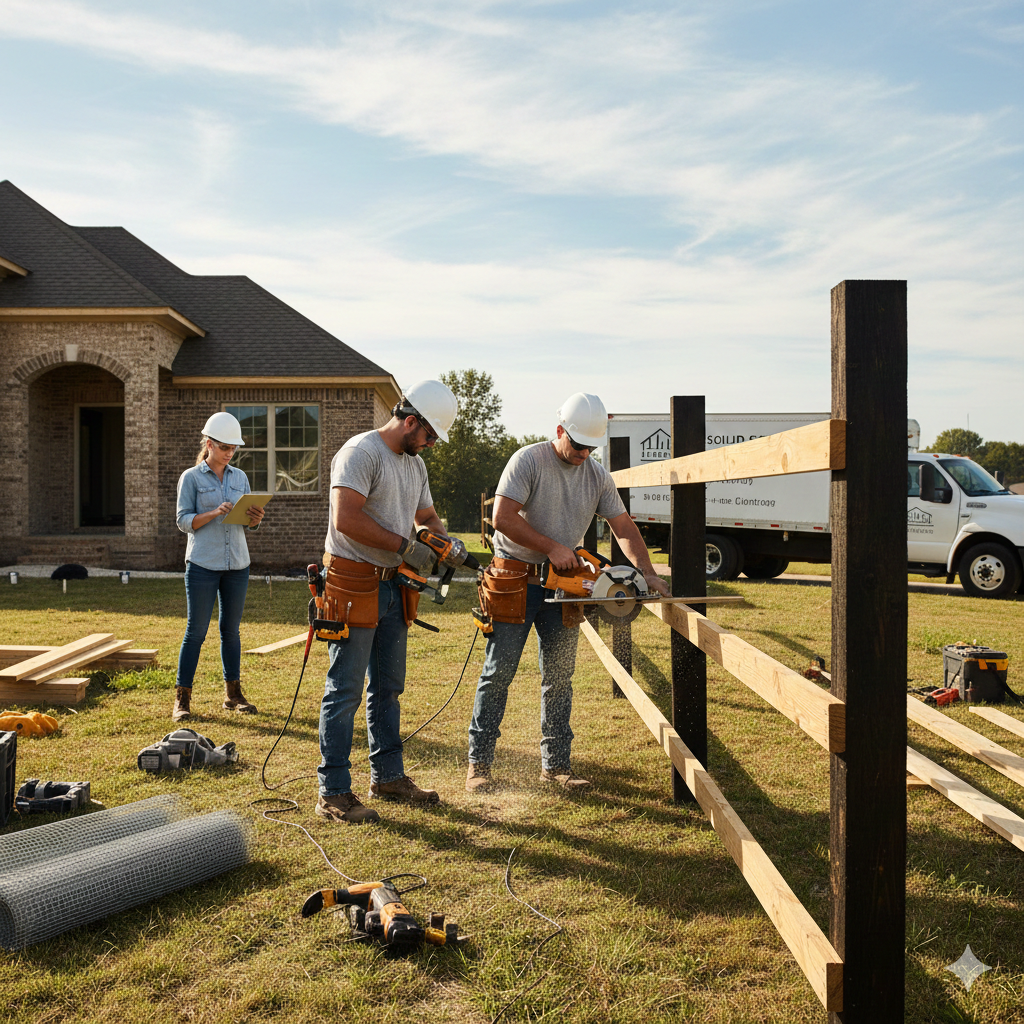
They handle site layout and property-line verification, using stakes and laser levels to set straight runs and ensure gate alignments. Contractors set posts in concrete to specified depths for wind and frost resistance and space pickets or panels to meet height and sight-line requirements.
You can ask for stain or paint finishes, decorative post caps, and self-closing or keyed locks for gates. Contractors will also advise on HOA rules and local fence setbacks, and can provide cost estimates for both material-only and full-install packages.
Commercial and Industrial Fencing
Commercial and industrial jobs emphasize security, durability, and code compliance. Contractors install chain-link with barbed or razor wire, welded wire, steel palisade, and high-security ornamental systems depending on threat level and visibility requirements.
They coordinate with site managers to meet OSHA and local safety standards, provide engineered plans for long runs or retaining-wall installations, and install security features like access-controlled gates, bollards, and anti-climb toppers. Contractors often work on schedules that minimize disruption to operations and can provide phased installation for large perimeters.
Expect options for corrosion-resistant coatings, concrete piling for heavy-duty gates, and integration with cameras or alarm systems. Warranty terms and maintenance contracts are common for commercial projects.
Repair and Maintenance Services
Contractors offer fence repair for rot, loose posts, panel damage, bent rails, and gate hardware failures. They assess whether to repair in-place, replace individual components, or replace entire sections based on remaining useful life and cost-effectiveness.
Routine maintenance services include power washing, re-staining or sealing wood, tightening fasteners, replacing hinges and latches, and rust treatment for metal fences. Many contractors provide seasonal inspection plans and emergency repairs after storms or vehicle impacts.
You can contract for scheduled maintenance with pricing options per visit or annual plans. Documentation of repairs, photos, and before/after estimates should accompany any larger restoration work.